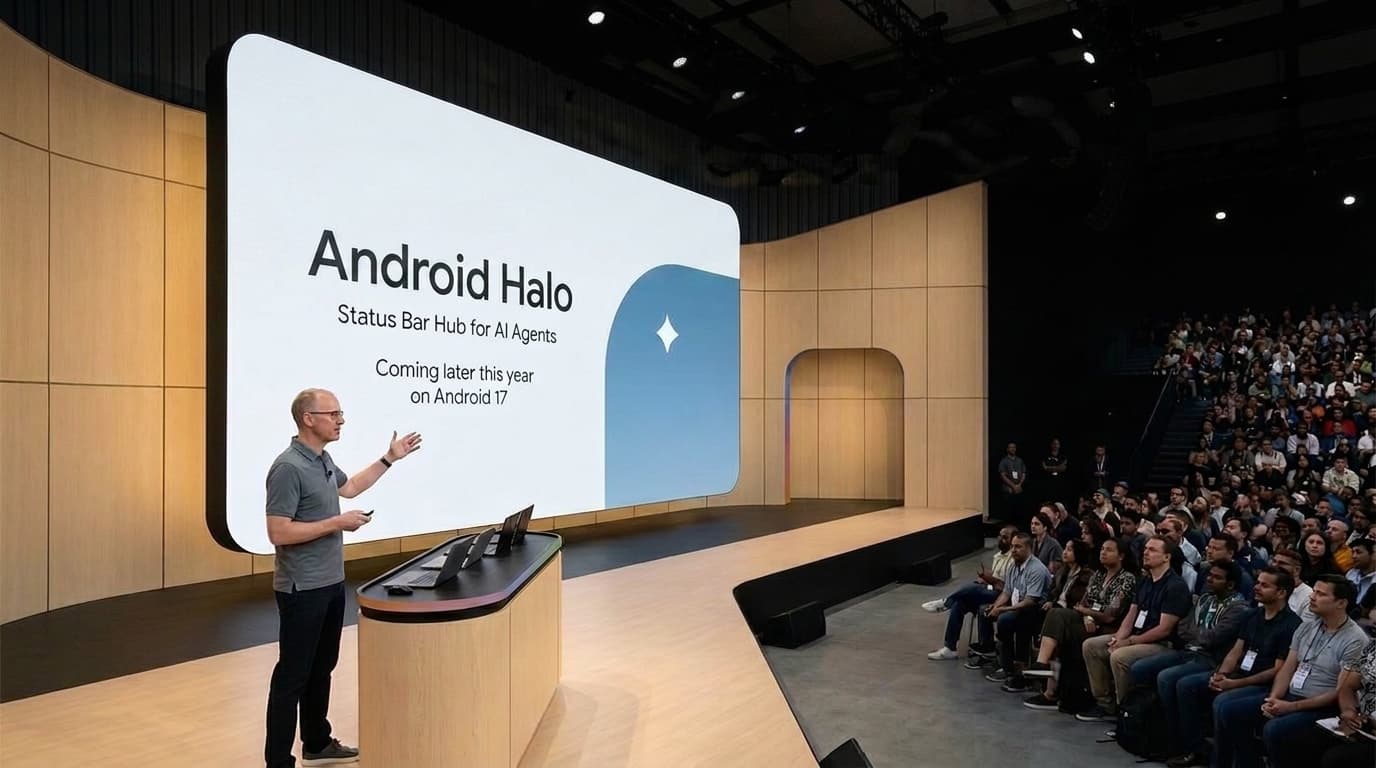
Google has shared new details about Android Halo, an upcoming Android feature designed to give AI agents a dedicated space inside the operating system. Instead of keeping AI activity hidden inside a separate app, Android Halo will live in the status bar and allow agents such as Gemini to provide updates, ask questions, and show results while working in the background.
The feature was first previewed around Google I/O as part of the company’s broader effort to turn Android from a traditional mobile operating system into what it calls a more intelligent system. Google says the goal is to make Android more proactive, helping users complete tasks by turning intention into action rather than forcing them to manually move between apps and settings.
Android Halo is built for background AI tasks
During a discussion with Logan Kilpatrick, Product Lead for Google AI Studio, Sameer Samat, President of Android at Google, explained that Android Halo is meant to act as a dedicated communication space for AI agents. According to Samat, this area in the status bar will allow a user’s chosen agent, whether Gemini or another supported agent, to provide progress updates and request input while tasks are running.
This matters because AI agents are expected to handle longer, more complex tasks over time. Instead of answering one question and disappearing, an agent may eventually help plan a trip, organize a project, research a topic, fill out forms, or complete multi-step actions. In those situations, the agent may need to ask a follow-up question, confirm an action, or notify the user when the task is complete.
Android Halo is Google’s answer to that interaction problem. Rather than interrupting users with full-screen prompts or forcing them to reopen Gemini, Halo would place the task status in a predictable location at the top of the screen.
A status bar experience for AI agents
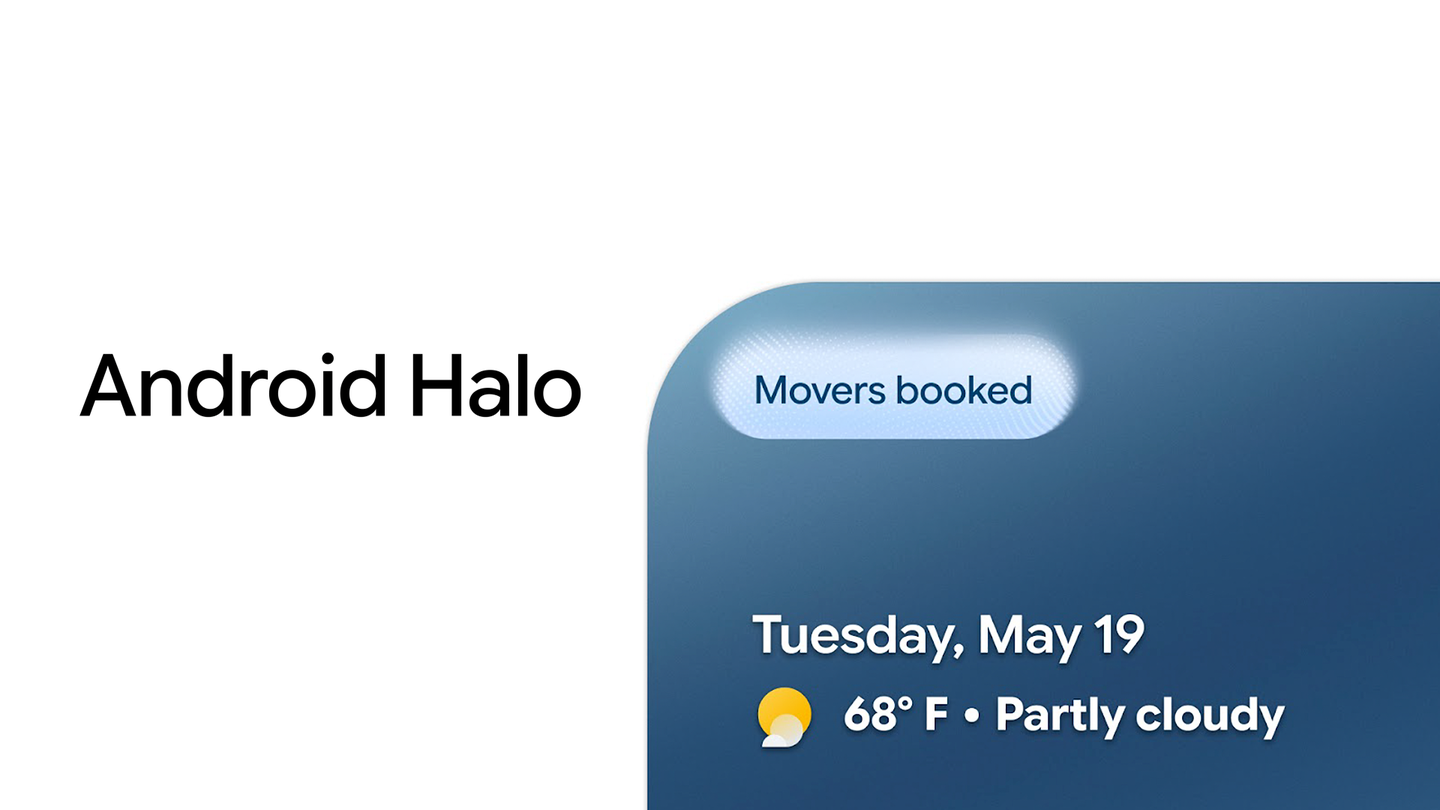
The clearest description so far is that Android Halo will work like a persistent status bar indicator for agent activity. When Gemini or another agent is working, users will be able to see that activity and interact with it without leaving what they are currently doing. Android Authority reports that Halo will let agents surface updates, ask questions, and present results from the status bar while they continue operating in the background.
9to5Google compares the idea to live notifications, with a persistent icon that gives users a quick way to check in on AI tasks. The difference is that Halo appears to be designed specifically for agentic AI workflows rather than ordinary app alerts.
For users, this could make AI feel less like a separate chatbot and more like a system-level assistant. If implemented well, it may reduce the friction of switching between apps, checking task progress, and giving the assistant more context when needed.
Google is also thinking about safety and control
One of the more important details is that Android Halo is not simply an open-ended AI overlay. Samat also described a virtual window system for AI agents, where Gemini can run inside a contained environment with a specific app. According to Android Authority, the agent would not be able to leave that container and freely use other apps.
This containerized approach could be important for privacy and security. If AI agents are going to operate more independently on phones, users will need clear boundaries around what an agent can access and what actions it can take. Ubergizmo notes that this structure is designed to keep the AI focused on its assigned task while limiting access outside the secure environment.
That point may become one of the most important parts of Android Halo. AI agents can be useful, but they also raise concerns about permissions, data access, and accidental actions. A visible status bar interface combined with task isolation could help users understand when an agent is active and what it is doing.
Android Halo will not be limited only to Gemini
Although Gemini is expected to be the main example of Android Halo in action, Google has suggested that the feature will be open to other agents as well. In a LinkedIn post, Samat said Android Halo will work with Gemini Spark and offer more capability with Gemini Intelligence on advanced devices. He also said Android will include an API so the feature can work with the user’s chosen agent.
That API approach fits Android’s broader positioning as an open platform. If Google follows through, Halo may become a system-level space where different AI assistants can communicate with users, rather than a Gemini-only feature locked to Google’s own services.
This could also create a new design pattern for AI apps on Android. Instead of every AI app building its own floating bubble, notification system, or background process, Halo may give developers a consistent place to show agent progress and request user input.
Gemini in cars is also getting smarter
The same discussion also touched on Gemini upgrades for Android Automotive and cars with Google built-in. According to 9to5Google, Samat demonstrated Gemini features that can use natural language to adjust vehicle functions such as climate control and lane assist. He also showed an experimental feature where Gemini connects to a car’s front-facing camera so users can ask questions about what is visible outside the vehicle.
That demonstration shows how Google is thinking beyond phones. The company appears to be building Gemini as a contextual assistant across devices, including smartphones, cars, and potentially other Android-powered screens.
Google is talking less about “AI” and more about usefulness
One interesting point from the 9to5Google report is that Google appears to be adjusting how it talks about AI. Samat reportedly acknowledged that many users are tired of hearing about AI as a buzzword. Instead, Google is trying to focus more on what these features actually do for people.
That may explain why Android Halo is being presented less as another AI feature and more as a new Android interface element. The idea is not simply to say that Gemini is smarter, but to make AI activity easier to follow, control, and continue while users are doing other things.
Release timeline

Google has not yet fully demonstrated every part of Android Halo in public use, and some capabilities remain under wraps. However, Samat’s LinkedIn post says Android Halo is expected to launch later this year with an update to Android 17.
That means Halo could become one of the more important Android 17 features, especially as Google continues building Gemini deeper into the Android experience.
Early reaction appears mixed
Early discussion around Android Halo appears to be divided. Some users and developers see it as a smart interface solution for the future of AI agents, especially because it gives long-running tasks a fixed place inside Android. Others remain skeptical, arguing that users may not want phones filled with long-running AI tasks or more system-level AI features. Public comments on Samat’s post show both interest in the open API approach and concerns about whether this level of AI integration is actually needed on mobile devices.
That mixed reaction is not surprising. Android Halo represents a larger shift in how mobile operating systems may work. If Google gets it right, AI agents could become easier to manage and less disruptive. If the execution is poor, Halo could feel like another layer of complexity in an already crowded mobile interface.
Final thoughts
Android Halo could become one of Google’s most important interface changes for the AI era. By giving AI agents a dedicated place in the status bar, Google is trying to make background AI tasks more visible, more interactive, and less disruptive.
The feature also shows where Android may be heading next. Instead of treating AI as a separate app, Google wants Android itself to become a system that can manage tasks, understand context, and help users complete actions across devices.
For now, Android Halo remains a feature to watch. Its success will depend on how clearly it communicates agent activity, how well it protects user control, and whether developers adopt the API beyond Gemini.